| Sabtu, 29 Mei 2010 |
| Telling about Crystals |
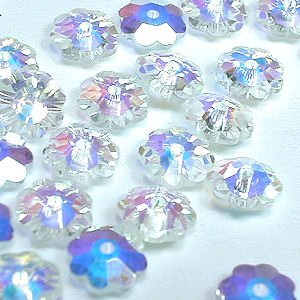 Look closely at some table salt through a magnifying glass. You’ll see that the bits of salt are made up of tiny cubes. Each cube is a salt crystal. The salt crystals within the particles can be different sizes, but they always have this shape. Look closely at some table salt through a magnifying glass. You’ll see that the bits of salt are made up of tiny cubes. Each cube is a salt crystal. The salt crystals within the particles can be different sizes, but they always have this shape.TINY PARTICLES IN PATTERNS A crystal contains identical particles that are arranged in a particular pattern such as a cube, rectangle, or hexagon. As a crystal grows in size, this pattern is repeated over and over. Salt is made up of the elements sodium and chlorine. Extremely tiny particles of sodium and chlorine, called atoms, form a repeating cubic pattern in a crystal of table salt. The more times the pattern is repeated, the bigger the crystal that forms. HOW DO CRYSTALS FORM? Crystals form when some liquids turn into solids. A liquid may freeze into a crystal. Snow, for example, is made of tiny crystals of frozen water. Crystals can also be left behind when a liquid dries out. When seawater in a rock pool dries out, tiny crystals of salt remain. Most of the rocks and minerals in Earth’s crust are crystals. Some crystals were formed from melted rock when it cooled and became solid. Others were left behind by the waters of a sea, lake, or river that dried up long ago. HOW DO WE USE CRYSTALS? Many crystals are beautiful. Diamonds, rubies, and emeralds are crystals that are made into attractive jewelry. Crystals also have many practical uses. Quartz crystals are used in clocks, radios, and sonar, the system that allows ships and submarines to see things underwater. Quartz crystals can also be pressed or heated to make electricity
Label: Crystals, CRYSTALS FORM, Diamonds, emeralds, rubies |
posted by fivesense @ 19.46  |
|
|
|
|
| THE COPPER |
 Have you used anything copper today? If you bought something and received change, there was copper in the coins. Did you use any electrical devices? The electricity was carried to your home by copper wires. There are even tiny amounts of copper inside you. Your body needs it for digesting food and keeping your blood healthy. Have you used anything copper today? If you bought something and received change, there was copper in the coins. Did you use any electrical devices? The electricity was carried to your home by copper wires. There are even tiny amounts of copper inside you. Your body needs it for digesting food and keeping your blood healthy.WHAT IS COPPER? Copper is a reddish-yellow metal. When it’s found in pure form in the ground it’s called native copper. Usually, though, copper is found combined with other elements in rocks. These rocks are called copper ores. When combined with other elements, copper is often greenish in color. The Statue of Liberty is made mostly of copper. Its greenish color comes from copper combined with the element oxygen from the air. Copper was one of the first metals discovered by human beings. People were making tools and jewelry from native copper over 10,000 years ago. HOW COPPER IS USED Pure copper is a soft metal. Early humans found that it made poor tools and weapons. They discovered that copper is much stronger when mixed with other metals. People made bronze by combining the metals copper and tin. They made brass by combining copper with zinc. Today, bronze and brass often contain other metals. But copper is still their main ingredient. Copper has long been used for making coins. Copper coins were always less valuable than silver or gold coins, because silver and gold are rarer metals. Most coins used in the United States today contain some copper. Copper sheets were once used to cover the bottoms of wooden sailing ships. They kept the wood from rotting or being eaten by sea animals. Substances that contain copper are used to make blue-green inks and dyes. Other copper compounds are used as insect and weed poisons on farms or to purify water. COPPER AND ELECTRICITY Copper became more valuable in the late 1800s. That was when people discovered how to use electricity. Of all metals, copper is the second-best conductor of electricity. (Silver is better, but copper is much cheaper.) Most copper mined today is used in the electrical industry. The wires in power lines are mostly copper. So is the wiring in electrical appliances and cords. Copper can be stretched into wires as thin as 0.001 inch (about 0.025 millimeters). WHERE DOES COPPER COME FROM? In ancient times, copper came mostly from the island of Cyprus in the Mediterranean Sea. (In fact, the name Cyprus means “copper.”) The ancient Egyptians, Greeks, and Romans made tools and weapons from Cyprus’s copper. Native Americans used copper too. They mined copper in what is now Michigan. Copper ornaments from this region were traded all over America. Today, much of the world’s copper comes from Chile. Arizona, Utah, and New Mexico are leading copper-mining states.
Label: Arizona, COPPER, ELECTRICITY, metals, reddish |
| posted by fivesense @ 19.14 |
|
|
|
|
| About COAL |
 Let’s imagine for a moment that there was no coal. Hey, who turned out the lights? And why isn’t the refrigerator working, or the TV? Much of the electricity we use comes from coal. Let’s imagine for a moment that there was no coal. Hey, who turned out the lights? And why isn’t the refrigerator working, or the TV? Much of the electricity we use comes from coal.Coal is a black rock. It produces energy when it burns. The Chinese were mining and using coal for fuel over 3,000 years ago. It once powered the world’s industry. It helped make the United States a wealthy nation. Coal-burning trains carried people and products across the country. Today, coal-burning power plants produce electricity for many homes and businesses. WHAT IS COAL? Coal is mostly made up of the element carbon. When carbon burns, it releases a large amount of energy as heat. That’s what makes coal such a useful fuel. Coal is a fossil fuel. That means it comes from the remains of ancient life buried deep in Earth’s crust. The coal we use today started out as plants that grew in swamps millions of years ago. When the plants died, they settled to the swamp bottom. Over time, layers of mud and rock formed. They compressed and hardened the plant material. Heat and pressure caused chemical changes. Gradually, the once-living matter became coal. COAL MINING Coal deposits are found in many parts of the world. Taking these deposits from the ground is called coal mining. Some coal deposits lie close to Earth’s surface. They can be mined by scraping away the dirt and rock. This is called surface mining, or strip mining. Other deposits lie deep underground. Miners must drill and blast deep holes in order to reach them. They bring machinery down to dig out the coal. This is called underground mining, or deep mining. Underground mines can be more than 1,000 feet (300 meters) deep. Their tunnels can be several miles long. Deep mining is a dangerous job. Cave-ins, fires, and explosions are some of the dangers. Coal mining can also release poisonous gases. In the 1800s, miners would bring small birds into the mines as a safety alarm. If a bird died, it showed that there was poisonous gas in the mine. Today, miners use machines to test the air. Surface mining is cheaper, easier, and safer than deep mining. But it scars the land. It can also create pollution and cause the soil to wash away. HOW DO WE USE COAL? A century ago, coal powered the steam engines that ran most machinery. Once, most American homes and office buildings were heated by coal-burning furnaces. Most of these jobs are now done by oil or natural gas. Five-sixths of the coal mined today in the United States is used in electric power plants. Coal is also used in making iron and steel and in the cement- and paper-making industries. PROBLEMS WITH COAL Like other fossil fuels such as oil, coal is a nonrenewable resource. This means that once it’s used up, it’s gone. But the United States has a lot of coal. It would take hundreds of years to use it all. Burning coal causes air pollution. Chemicals in coal can produce “acid rain.” Acid rain kills plants and pollutes rivers. However, machines called scrubbers can keep most of this pollution from getting into the atmosphere. Burning coal also releases gases that cause global warming. These gases trap heat from the Sun. The trapped heat warms up the planet. Global warming could cause icecaps to melt and change Earth’s climate. Burning all of the coal available to us would be bad for the environment.
Label: black rock, Coal, COAL MINING, USE COAL |
| posted by fivesense @ 19.00 |
|
|
|
|
| Continents |
 You are probably on a continent right now. A continent is an enormous area of dry land on Earth. A continent is mostly surrounded by ocean. You can only see the ocean if you are on the edge of a continent. If you are not on a continent, then you might be on an island. An island is a smaller piece of land with water all around.
1. Although Antarctica has several scientific research facilities, it has no permanent population.
2. Includes New Zealand and the Pacific Islands.
Source: United States Census, International Programs Center.
EARTH’S CONTINENTS Some geographers say Earth has seven continents. Others say six because they count Europe and Asia as one continent called Eurasia. The biggest continent is Asia. The second largest continent is Africa. The other continents are, in order of size, North America, South America, Antarctica, Europe, and Australia.
WHAT DO CONTINENTS LOOK LIKE? Continents have all types of land. Continents have plains and mountains. Continents have deserts and lakes. People build cities on continents. Almost all of the people on Earth live on continents. More people live on Asia than on all the other continents combined. The edge of a continent touches the ocean. The edge of a continent can be smooth, sandy beach. It can be made of steep, rocky cliffs. The edge of a continent slopes down into the sea. WHERE DID EARTH’S CONTINENTS COME FROM? Geologists think that millions of years ago Earth had only one continent. They named this huge continent Pangaea. Pangaea broke into two continents about 200 million years ago. Geologists named these two continents Gondwanaland and Laurasia. The continents kept breaking up and moving away from each other. Africa, South America, Antarctica, and Australia came from Gondwanaland. Eurasia and North America came from Laurasia. HOW CAN CONTINENTS MOVE? Continents can move because Earth’s surface is made of giant plates. The plates move around. The continents ride on these plates. The plates slide over a layer of partly melted hot rock. In some places, the plates crash together. In other places, the plates move apart. One of the places the plates move apart is under the Atlantic Ocean. Hot, melted rock oozes up through a crack in the ocean floor. The hot rock cools and gets hard. It makes new seafloor. As new seafloor is added, the Atlantic Ocean grows wider. Europe and the United States are slowly growing farther apart.
|
| posted by fivesense @ 17.54 |
|
|
|
|
| EARTH’S ATMOSPHERE IS AIR |
 Every time you take a breath, you are inhaling Earth’s atmosphere. You cannot see, smell, or taste Earth’s atmosphere. It is the air all around you. Other planets also have an atmosphere. An atmosphere is a blanket of gases that wraps around a planet or any other object in space. Every time you take a breath, you are inhaling Earth’s atmosphere. You cannot see, smell, or taste Earth’s atmosphere. It is the air all around you. Other planets also have an atmosphere. An atmosphere is a blanket of gases that wraps around a planet or any other object in space.
EARTH’S ATMOSPHERE IS AIR
Earth’s atmosphere is made up of a mix of gases called air. Air contains more nitrogen than any other gas. Nitrogen makes up 78 percent of the air. Oxygen, the gas that is most important for keeping you alive, makes up 21 percent. Earth is the only planet to have so much oxygen in its atmosphere. Water vapor and other gases are also present in small amounts in Earth’s atmosphere.
The pull of gravity holds the atmosphere in place. Without gravity, the air in Earth’s atmosphere would float off into space. Gravity is the force that also keeps you from floating away from Earth.
THE WEIGHT OF AIR
Air has weight. You cannot feel the weight of air, but all the air in the atmosphere presses downward. This weight is called atmospheric pressure. Atmospheric pressure depends on how much gas is in the atmosphere. The higher you go, the less air there is and the lower the atmospheric pressure gets. The atmosphere is heaviest and the atmospheric pressure highest close to Earth.
Differences in air temperature close to Earth form areas of high and low pressure. Warm air is light and rises upward. It makes low-pressure areas. Cold air is heavy and sinks. It makes high-pressure areas.
WEATHER AND THE ATMOSPHERE
Air in the atmosphere is always moving. You can feel air blowing on your face. You can see air scattering autumn leaves and making tree branches sway. Moving air is called wind. The wind blows where areas of high and low atmospheric pressure meet. As warm air rises, cold air rushes in to take its place.
Big areas of high and low atmospheric pressure cause storms. Thunderstorms often occur where big areas of high and low pressure come together. Huge thunderclouds form in these places.
Water vapor in the atmosphere makes clouds. Water vapor is a gas. As the gas cools, it turns to liquid water. The water falls to Earth as rain or snow.
A LAYER CAKE OF AIR
Earth’s atmosphere extends about 6,000 miles (9,600 kilometers) above the surface of Earth, where we live. You can think of the atmosphere as having several layers. Most of our weather comes from winds, temperature changes, and water vapor in the layer nearest Earth’s surface. This layer is called the troposphere. Most of the clouds you see in the sky are floating in the troposphere.
The stratosphere is the layer above the troposphere. Jet airplanes fly in the stratosphere because there are few clouds up so high and the ride is usually less bumpy. Earth’s ozone layer is in the stratosphere. The ozone layer absorbs, or soaks up, harmful rays from the Sun. These harmful rays would probably destroy life if they reached Earth’s surface.
The atmosphere gets thinner and thinner in the next layers up, the mesosphere and thermosphere. The top layer of Earth’s atmosphere is the exosphere. The atmosphere ends here, about 6,000 miles (9,600 kilometers) above Earth’s surface. The thin air here gradually merges with outer space.
ATMOSPHERES ON OTHER PLANETS
Any planet that has gas around it has an atmosphere. Mercury, the planet closest to the Sun has almost no atmosphere. Pluto, the planet farthest from the Sun, is so cold that sometimes its atmosphere freezes. The gases in Pluto’s atmosphere turn to ice.
There are colorful bands of clouds in the atmospheres of some planets. A gas called methane makes the atmospheres of Neptune and Uranus look smooth and blue. Jupiter has a swirling storm in its atmosphere called the Great Red Spot that may be like a giant hurricane. |
| posted by fivesense @ 17.46 |
|
|
|
|
| WHAT IS AIR? |
 Take a really deep breath. Feel how your chest gets bigger and bigger. Your chest gets bigger because your lungs are filling up with air. You cannot see air, but air is all around you. You can feel it when the wind blows. Take a really deep breath. Feel how your chest gets bigger and bigger. Your chest gets bigger because your lungs are filling up with air. You cannot see air, but air is all around you. You can feel it when the wind blows.Earth’s atmosphere is made of air. An atmosphere is made up of the gases that surround a planet.
WHAT IS AIR? Air is a mixture of several different gases. The main gases in air are nitrogen, oxygen, and argon. Air also contains smaller amounts of hydrogen, carbon dioxide, water vapor, helium, and other gases. Oxygen is the most important gas for animals. Animals must breathe oxygen in order to live. Carbon dioxide is the most important gas for plants. Plants use carbon dioxide and sunlight to make food. Plants give off oxygen. Animals turn the oxygen back into carbon dioxide when they breathe.
TAKING AIR WITH YOU You can go to places where there is no air. There is no air underwater, but you can dive underwater. You can stay underwater a short time just by holding your breath. Air tanks let you stay underwater for a long time. Scuba divers wear tanks on their backs. The tanks are filled with gases that make up air. The divers breathe the gases through hoses. There is less and less air the higher up you go. People gasp for breath at the tops of tall mountains. Airplanes must carry air. Once the airplane gets up high, air is pumped into the cabin where passengers sit. Astronauts have to take all the air they need with them—there’s no air in space!
|
| posted by fivesense @ 17.03 |
|
|
|
|
|


